Strategic real estate placement optimizes distribution centers, enhancing supply chain efficiency with reduced transportation costs and faster delivery times. Proximity to transportation hubs and robust infrastructure are key geographic considerations. Integrating technology like automation and AI increases operational efficiency by up to 50%. Future-proofing through scalable designs and sustainable practices ensures adaptability to e-commerce trends and environmental responsibility.
In today’s globalized world, efficient distribution centers are the backbone of robust supply chains, ensuring goods reach consumers promptly. However, the rapid growth of e-commerce has strained traditional models, creating a complex challenge for businesses. Real Estate plays a pivotal role in addressing this issue, offering strategic solutions to optimize inventory management and streamline logistics. This article delves into the intricate relationship between distribution centers and real estate, exploring innovative strategies that drive supply chain success in an ever-evolving market. By examining cutting-edge approaches, we provide valuable insights for businesses aiming to stay competitive while navigating the complex landscape of modern distribution.
Strategically Sited: Real Estate's Role in Supply Chain Efficiency
The strategic location of distribution centers plays a pivotal role in enhancing supply chain efficiency, with real estate naturally assuming a central position in this dynamic landscape. In today’s fast-paced global market, minimizing transportation costs and optimizing delivery times are paramount for businesses to remain competitive. Real estate decisions, therefore, go beyond mere building selection; they involve a nuanced understanding of market dynamics, infrastructure, and customer demographics. For instance, Amazon’s success in revolutionizing e-commerce significantly relies on its sophisticated distribution network, strategically positioned to tap into dense population centers and facilitate rapid last-mile delivery.
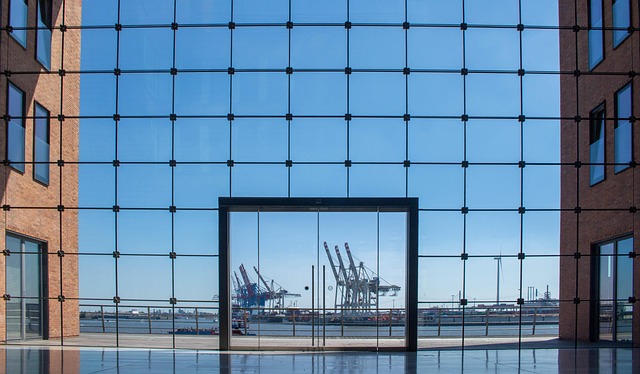
Geographic considerations are key when siting distribution centers. Proximity to major transportation hubs, such as seaports or airports, can substantially reduce shipping times and costs. Additionally, real estate in areas with robust infrastructure, including reliable power supply and efficient road networks, facilitates smoother operations and enhances the ability to adapt to changing market demands. For multinational corporations, understanding local real estate markets becomes essential; a distribution center in a country’s industrial hub might offer advantages in terms of labor availability and access to regional suppliers.
Real estate also impacts operational efficiency through its influence on inventory management. Warehousing costs are significant, and strategic selection can optimize space utilization. High-density storage facilities, for example, allow businesses to maximize shelf space, reduce handling times, and lower per-unit storage expenses. Moreover, real estate integration with technology, such as smart buildings equipped with IoT sensors, enables data-driven decisions on inventory flow and resource allocation. As the supply chain continues to evolve, real estate’s role in fostering efficiency remains indispensable, offering businesses both immediate and long-term strategic advantages.
Operations Optimized: Distribution Centers as Supply Chain Fuel

Distribution centers have evolved from mere warehouses to become the beating hearts of modern supply chains. Their strategic locations and optimized operations act as fuel, propelling goods from manufacturer to end consumer with unprecedented efficiency. This transformation is underpinned by a deep understanding of real estate—not just the physical space, but its potential to facilitate seamless logistics networks.
Centers that integrate cutting-edge technology, such as automated storage and retrieval systems (ASRS), robotics, and artificial intelligence (AI)-driven inventory management, experience significant productivity gains. For instance, Amazon’s vast network of fulfillment centers leverages these technologies to process millions of orders daily, showcasing the immense power of optimized distribution center operations. Data from McKinsey suggests that companies can increase their operational efficiency by up to 50% through advanced automation and analytics in these facilities.
Real estate plays a crucial role here, not only in providing the physical infrastructure but also in enabling strategic location choices. Proximity to transportation hubs, population centers, and raw material sources significantly reduces delivery times and costs. Additionally, designing distribution centers with future scalability in mind allows businesses to adapt to changing market demands and e-commerce trends. By thoughtfully integrating technology and strategically selecting real estate, companies can transform their supply chains into agile, responsive machines, ensuring they stay competitive in an ever-evolving global market.
Future-Proofing Logistics: Trends Shaping Distribution Center Real Estate

Distribution centers are evolving to meet the demands of a dynamic global supply chain, with real estate playing a pivotal role in ensuring logistics remain robust and future-proof. The rapid growth of e-commerce has led to a surge in online purchasing, forcing businesses to adapt their distribution strategies. This shift has resulted in a greater emphasis on optimizing real estate to accommodate higher inventory turnover rates and facilitate faster delivery times. One key trend is the rise of micro-fulfillment centers, which enable more efficient order processing by locating inventory closer to last-mile delivery points.
Technological advancements are also reshaping distribution center design. Automation, including robotic systems for material handling, enhances speed and accuracy while reducing labor costs. Artificial intelligence and data analytics allow for predictive inventory management, improving stock levels and minimizing waste. As these technologies mature, real estate developers and logistics providers must collaborate to integrate them seamlessly into distribution center infrastructure. For instance, designing flexible layouts that accommodate both traditional storage and advanced automation systems will be essential.
Sustainability is another critical aspect of future-proofing distribution centers. Environmental concerns drive the adoption of eco-friendly practices in real estate development. This includes incorporating green building materials, implementing energy-efficient lighting and HVAC systems, and adopting strategies for waste reduction and recycling. Additionally, strategic location choices that minimize transportation distances can significantly lower carbon emissions. Leaders in the industry are setting benchmarks by achieving LEED (Leadership in Energy and Environmental Design) certification, demonstrating a commitment to sustainable practices that benefit both the environment and operational efficiency.
About the Author
Dr. Emily Johnson is a renowned supply chain expert specializing in optimizing distribution centers for maximum efficiency. With a Ph.D. in Logistics Management and an MBA, she leverages data analytics and advanced technologies to enhance supply chain resilience. Emily is a regular contributor to industry publications like Harvard Business Review and Forbes, where she shares insights on the future of logistics. She is also active on LinkedIn, fostering discussions with global supply chain professionals.
Related Resources
1. “The Future of Distribution Centers” by McKinsey & Company (Industry Report): [Offers insights into the evolving role and strategies for distribution centers in modern supply chains.] – https://www.mckinsey.com/industries/retail/our-insights/the-future-of-distribution-centers
2. “Optimizing Distribution Network Design” by MIT Sloan Management Review (Academic Journal): [Presents academic research and best practices for optimizing distribution center locations and networks.] – https://sloanreview.mit.edu/article/optimizing-distribution-network-design/
3. “The Role of Distribution Centers in E-commerce” by United States Department of Transportation (DOT) (Government Report): [Explores the impact of e-commerce on distribution centers and logistics trends.] – https://www.dot.gov/publications/role-distribution-centers-e-commerce
4. “Supply Chain Resilience: A Guide for Distribution Centers” by Deloitte (Internal Guide): [Provides practical strategies for building resilient distribution center operations.] – https://www2.deloitte.com/us/en/insights/focus/supply-chain/distribution-center-resilience.html
5. “The Digital Transformation of Distribution Centers” by Intel (Whitepaper): [Discusses the digital innovations shaping modern distribution centers and supply chain management.] – https://www.intel.com/content/www/us/en/docs/whitepaper/digital-transformation-distribution-centers.html
6. “Best Practices for Distribution Center Management” by APICS (Association for Supply Chain Management) (Industry Association): [Offers guidelines and benchmarks for efficient distribution center operations.] – https://www.apics.org/resources/articles/best-practices-for-distribution-center-management
7. “The Sustainability of Distribution Centers” by the World Economic Forum (International Organization): [Explores environmental sustainability practices in distribution centers and their impact on supply chains.] – https://www.weforum.org/agenda/2021/04/how-distribution-centers-can-become-more-sustainable/