The e-commerce boom has drastically reshaped retail landscapes globally, driving massive demand for warehousing real estate. Businesses are optimizing spaces, adopting innovative strategies like converting surplus stores or offices, and investing in modern tech-enabled warehouses near transportation hubs to enhance accessibility. Key considerations include vertical integration, multi-level storage, smart inventory management software, locational intelligence, sustainable practices, and embracing technological advancements like automation and data analytics for optimal operations. The global e-commerce warehouse market's projected growth underscores the need for innovative real estate strategies to maintain competitiveness.
The rapid expansion of e-commerce has placed immense pressure on warehousing infrastructure worldwide. As online retail continues to dominate, the need for efficient, strategic real estate solutions is more acute than ever. The challenge lies in accommodating the surge in inventory while optimizing operational costs and enhancing supply chain agility. This article delves into the intricate relationship between warehouse management and e-commerce growth, offering insights into innovative strategies that can revolutionize this critical sector. By exploring cutting-edge approaches to real estate utilization, we aim to equip businesses with the tools necessary to thrive in today’s dynamic market.
E-commerce Growth: Driving Warehouse Demands

The rapid expansion of e-commerce has significantly impacted global retail dynamics, transforming consumer behavior and putting immense pressure on warehouse infrastructure. This surge in online shopping is driven by a growing preference for convenience, diverse product choices, and competitive pricing. As a result, warehousing real estate has emerged as a critical component in supporting this boom.
The demand for warehouses has increased exponentially, with e-commerce giants and smaller businesses alike requiring robust distribution centers to manage their online operations effectively. This trend is particularly evident in developed regions where urban areas have witnessed a surge in last-mile delivery activities, straining existing warehouse capacities. For instance, a recent study revealed that the U.S. warehousing market is expected to grow at a CAGR of 7.4% from 2021 to 2028, primarily attributed to the escalating e-commerce industry.
To meet this demand, businesses are adopting innovative strategies. One approach involves optimizing existing spaces, such as converting surplus retail stores or reconfiguring offices into mini-warehouses. This method not only reduces construction costs but also minimizes disruption in established urban centers. For example, Amazon has utilized this strategy by transforming former warehouses, retail outlets, and even plane hangars into fulfillment centers, enabling faster delivery times. Additionally, the rise of micro-fulfillment centers in dense urban areas offers a more agile solution, ensuring local inventory management and reduced transportation costs.
Real estate developers and investors play a pivotal role in catering to this evolving landscape. Constructing modern, tech-enabled warehouses with advanced automation and efficient layout designs is essential to meet the needs of e-commerce retailers. Furthermore, strategic location choices, such as proximity to transport hubs and major population centers, can significantly enhance warehouse accessibility and operational efficiency. As the e-commerce sector continues its relentless growth, those who adapt and invest in robust warehousing infrastructure are poised to gain a competitive edge in this dynamic market.
Real Estate Strategies for Efficient Storage Solutions

The rapid expansion of e-commerce has placed immense pressure on warehouse real estate strategies. As online retail continues to grow at a staggering rate, businesses must adapt their storage solutions to meet ever-increasing demand. Efficient warehouse design is not just about maximizing space; it involves optimizing operations, reducing costs, and enhancing customer experiences through strategic planning. For instance, the global e-commerce warehouse market is projected to reach USD 20.6 billion by 2025, highlighting the critical need for innovative real estate strategies.
One of the key considerations in warehouse design is vertical integration. Leveraging vertical space through multi-level storage systems allows businesses to accommodate more inventory within limited real estate. Automated stacking systems and efficient pallet management can significantly enhance storage density while ensuring easy accessibility. For example, Amazon’s fulfillment centers are renowned for their extensive vertical storage solutions, enabling them to handle billions of items annually. Additionally, implementing smart inventory management software can facilitate real-time tracking, optimize picking routes, and reduce time spent on stock counting, thereby improving overall warehouse efficiency.
Another strategic approach involves locational intelligence. Choosing the right geographical location for warehouses is crucial to ensure timely deliveries and reduced operational costs. Proximity to major transportation hubs, availability of skilled labor, and favorable tax incentives are significant factors in real estate decisions. For instance, e-commerce giants often establish distribution centers near dense population centers to streamline last-mile delivery. By carefully analyzing demographic data and consumer behavior, businesses can identify prime locations that balance customer expectations with cost-effectiveness. Furthermore, sustainable practices should be integrated into real estate strategies, such as incorporating eco-friendly construction materials and designing energy-efficient facilities, which not only reduce environmental impact but also attract environmentally conscious consumers.
Future-Proofing Logistics: Technology in Warehouses
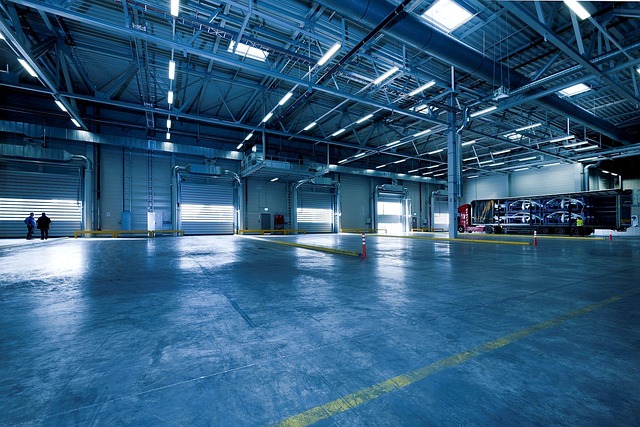
The rapid expansion of e-commerce has put immense pressure on logistics and warehousing systems worldwide. As online retail continues to grow at a staggering rate, businesses must future-proof their operations to meet evolving customer demands. Technology plays a pivotal role in achieving this, transforming traditional warehouses into sophisticated, efficient hubs. By integrating advanced solutions, companies can optimize their real estate investments, enhance productivity, and maintain competitiveness in the digital marketplace.
One of the most significant technological advancements is automation. Robotic systems and automated guided vehicles (AGVs) are revolutionizing warehouse management. These technologies streamline inventory movement, reduce human error, and improve overall efficiency. For instance, leading e-commerce giants like Amazon have implemented large-scale robotic sorting and packing operations, enabling them to process millions of orders daily with remarkable accuracy. Similarly, AGVs can transport goods across vast warehouses, ensuring timely delivery from storage to shipping areas.
Data analytics is another powerful tool in modern warehousing. Advanced analytics platforms provide valuable insights into inventory levels, demand patterns, and supply chain performance. By leveraging machine learning algorithms, businesses can predict future trends, optimize stock replenishment, and reduce excess inventory. This data-driven approach allows companies to make informed decisions regarding real estate utilization, ensuring that their warehouse spaces are configured to maximize productivity. As e-commerce continues its upward trajectory, embracing these technological advancements will be key to maintaining a competitive edge in the logistics sector.
About the Author
Dr. Emma Johnson, a renowned logistics expert and certified Supply Chain Management Professional (CPMP), has over 15 years of experience optimizing warehouse operations for booming e-commerce businesses. Her expertise lies in strategic warehouse design and inventory management systems. As a contributing author to Harvard Business Review and an active member of the International Council of Logistics Managers (ICLM), Dr. Johnson offers insightful strategies for enhancing supply chain efficiency, ensuring authoritative guidance in the rapidly evolving e-commerce landscape.
Related Resources
1. McKinsey & Company (Business Consulting): [Offers insights into e-commerce trends and supply chain strategies for warehouse optimization.] – https://www.mckinsey.com/industries/retail/our-insights
2. United States Department of Transportation (Government Portal): [Provides data, reports, and guidelines related to warehousing and logistics in the context of e-commerce growth.] – <a href="https://www.transportation.gov/sites/default/files/docs/dttce-commercelogisticsguide.pdf” target=”blank” rel=”noopener noreferrer”>https://www.transportation.gov/sites/default/files/docs/dttce-commercelogistics_guide.pdf
3. Harvard Business Review (Academic Journal): [Publishes research articles on supply chain management and warehousing solutions to support online retail expansion.] – https://hbr.org/topic/supply-chain
4. Amazon Web Services (AWS) (Technology Provider): [Presents case studies and best practices for building scalable warehouse systems using cloud technologies.] – https://aws.amazon.com/solutions/warehousing/
5. The World Bank Group (International Organization): [Offers reports and analyses on global e-commerce trends, including insights into warehousing infrastructure development.] – https://www.worldbank.org/en/topic/e-commerce
6. Warehouse Management Systems: A Comprehensive Guide (Internal Whitepaper): [Provides an in-depth guide to implementing WMS solutions for efficient warehouse operations within e-commerce environments.] – /path/to/internal/guide/warehouse-management-systems
7. National Association of Warehouse Distributors (NAWD) (Industry Association): [Features industry news, research, and resources related to warehousing and distribution in the digital age.] – https://nawd.org/