
The exponential growth of e-commerce has strained traditional warehouse infrastructure, prompting a shift in real estate strategies. Key innovations include micro-fulfillment centers, last-mile delivery hubs, automation, and sustainable practices. Strategic location near transportation hubs and population centers is crucial for efficient deliveries. Businesses investing in state-of-the-art warehouses and adapting real estate strategies will capitalize on the digital revolution in e-commerce. Efficient warehouse management involves dynamic inventory systems, vertical integration, automated storage, modular design, and flexible layouts to maximize space and stay competitive.
The rapid expansion of e-commerce has placed significant pressure on warehousing infrastructure worldwide. With the continuous growth of online retail, efficient and strategic warehouse management is more critical than ever for businesses to remain competitive. The challenge lies in accommodating the increasing demand for storage while optimizing real estate utilization. This article delves into the intricate relationship between e-commerce logistics and warehouse design, offering insightful solutions to maximize space, streamline operations, and meet the evolving needs of the digital marketplace. By exploring innovative strategies, we aim to equip professionals with valuable knowledge to navigate this dynamic landscape.
E-commerce Growth: The Warehouse Revolution
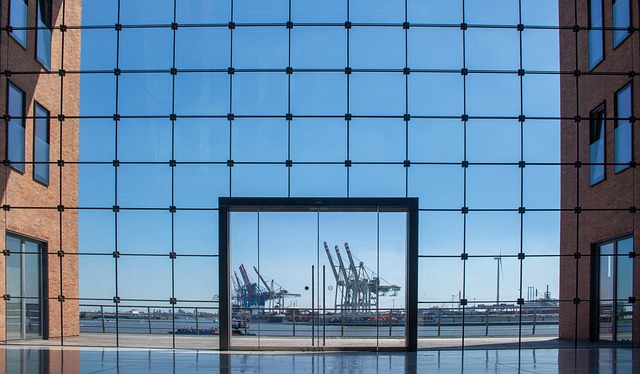
The rapid expansion of e-commerce has placed immense strain on traditional warehouse infrastructure, prompting a revolutionary shift in real estate strategies. As online shopping becomes the new norm, businesses are realizing the importance of optimizing their distribution networks to meet soaring demand. This transformation is reshaping urban landscapes and spurring innovative solutions in warehousing and logistics.
The rise of e-commerce has led to a significant increase in online retail sales, with global e-retail sales expected to reach $5.4 trillion by 2022, according to Statista. This growth has resulted in a surge in package deliveries, straining existing warehouse capacities. In response, companies are adopting new approaches, such as micro-fulfillment centers and last-mile delivery hubs, to streamline operations and enhance customer experiences. These decentralized warehousing models allow for faster order processing and more efficient inventory management, addressing the challenges posed by e-commerce’s relentless growth.
Real estate developers and businesses are embracing this evolution by rethinking traditional warehouse design. Modern facilities now incorporate advanced technologies like automation, robotics, and smart inventory management systems to boost efficiency. Additionally, sustainable practices are gaining traction, with eco-friendly designs and energy-efficient operations becoming the norm. This not only reduces environmental impact but also attracts environmentally conscious consumers. As e-commerce continues its upward trajectory, businesses that invest in state-of-the-art warehouses and adapt their real estate strategies will be better positioned to capitalize on this digital revolution.
Strategizing Location: Real Estate for Success

The expansion of e-commerce has necessitated a corresponding growth in warehousing infrastructure, with strategic location being paramount. In an era where online retail accounts for a significant portion of global sales, efficient distribution networks are the backbone of successful businesses. Real estate plays a pivotal role in this equation; it’s not merely about finding space, but selecting locations that offer optimal advantages.
Key considerations include proximity to major transportation hubs and dense population centers. For instance, cities with bustling ports and well-connected road and rail networks can significantly reduce delivery times and costs. E-commerce giants like Amazon have strategically invested in real estate, building vast warehouses near urban areas to ensure same-day or next-day deliveries. This approach has proven instrumental in maintaining competitive edge in the market.
Additionally, understanding local real estate dynamics is crucial. Factors such as property prices, lease terms, and zoning regulations can greatly impact operational costs and flexibility. Companies should look for regions with favorable business-friendly policies that offer incentives for e-commerce operations. For example, many countries are now establishing dedicated logistics parks to accommodate the specific needs of online retailers, providing tax breaks and streamlined permitting processes. By strategically navigating real estate opportunities, businesses can not only reduce overhead but also enhance their delivery networks’ efficiency.
Ultimately, successful warehousing strategies in the e-commerce landscape hinge on a deep understanding of where to establish physical presence. It’s about more than just choosing a location; it’s about leveraging real estate as a competitive advantage, ensuring fast and reliable delivery while optimizing operational costs. As the online retail sector continues its meteoric rise, businesses that strategize their real estate choices will be best positioned for success.
Efficient Operations: Maximizing Storage Spaces

The rapid expansion of e-commerce has placed immense pressure on warehouse operations to keep up with soaring demand. Efficient management of storage spaces is now a critical factor for success in this sector, as businesses strive to optimize their real estate investments. With online retail expected to continue its meteoric rise, warehousing experts are turning to innovative strategies to maximize every available square foot.
One key approach involves implementing dynamic inventory management systems. By utilizing technology to track and analyze stock levels in real-time, warehouses can adopt a more flexible layout. This allows for the efficient redistribution of storage areas based on current demand patterns, ensuring high-demand items are readily accessible while freeing up space for slower-moving products. For instance, Amazon’s vast network of fulfillment centers employs advanced automation and data analytics to achieve remarkable efficiency in its warehousing operations, enabling them to manage massive inventory volumes with minimal waste.
Additionally, vertical integration is gaining traction as a strategy to combat limited horizontal real estate. Warehouses are exploring multi-level storage solutions, utilizing high-reach equipment to access upper shelves, and implementing stackable storage systems. This vertical expansion not only maximizes floor space but also improves operational productivity by reducing the time spent on manual item retrieval. A case in point is the adoption of automated vertical storage systems in many e-commerce distribution centers, which have demonstrated significant space savings and enhanced order fulfillment capabilities.
To further optimize warehouse layout, experts suggest a modular approach to design. This flexibility allows businesses to adapt their facilities as e-commerce trends evolve. Modular warehousing offers the advantage of reconfigurable spaces, enabling companies to accommodate changing product needs, new technologies, or even shifting market demands without significant construction costs. By embracing these strategies, e-commerce businesses can ensure their warehouses remain agile and efficient, ultimately contributing to a competitive edge in the dynamic digital marketplace.